
Many people following a keto diet wonder how different foods impact their progress and health. The glycemic index (GI) of Manuka honey plays a significant role in this context, as it measures how quickly foods raise your blood sugar levels. With a GI that is higher than most traditional sweeteners, knowing how to incorporate Manuka honey into your meals can help you maintain ketosis while still enjoying the benefits of this unique honey. In this post, you will discover whether Manuka honey is a viable option for your keto lifestyle.
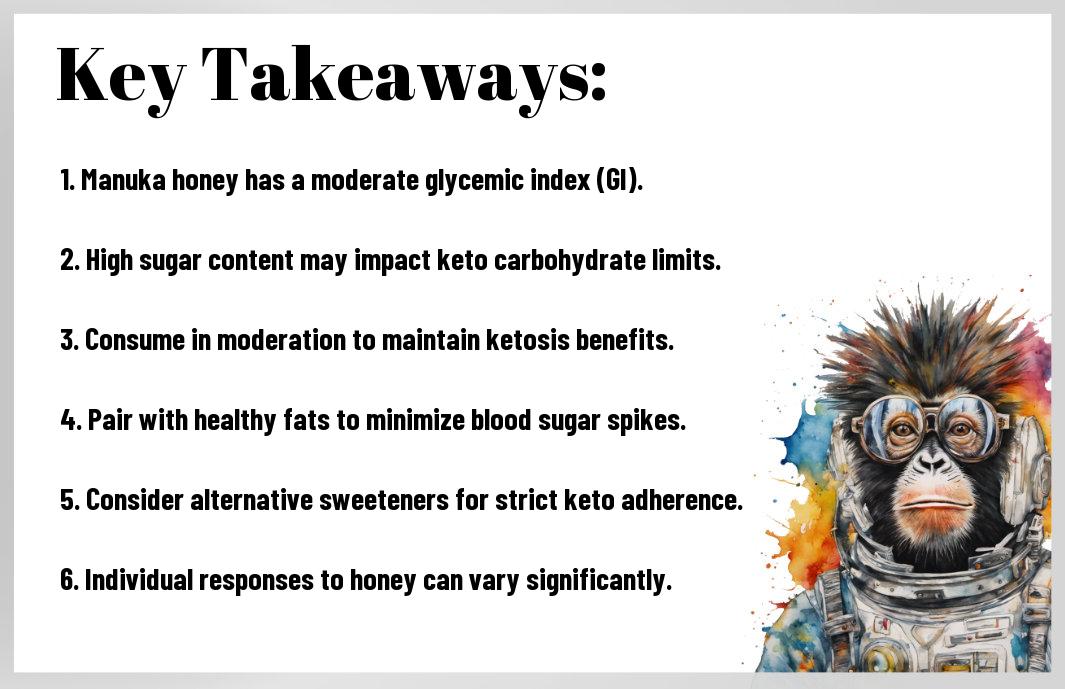
Understanding the Glycemic Index
The Glycemic Index (GI) is a scale that ranks carbohydrates based on their effect on blood glucose levels. It provides insight into how different foods can impact your energy levels, hunger, and metabolic processes. For those on a keto diet, understanding the GI is important as it helps you choose foods that keep your blood sugar stable, ensuring you stay in ketosis and maintain your health.
Definition and Importance
To effectively manage your diet, it’s important to understand the definition of the Glycemic Index and its significance. The GI ranks foods from 0 to 100, with lower values indicating slower sugar absorption, which is important for maintaining steady energy and reducing cravings.
How Glycemic Index is Measured
Any food’s GI is determined by comparing the blood sugar response it elicits to that of pure glucose. This response is measured over a two-hour period following consumption, reflecting how quickly and significantly the food raises your blood sugar levels.
Glycemic testing involves participants consuming a specific amount of carbohydrate from a test food and monitoring their blood glucose levels. After consuming the food, blood samples are taken at set intervals to evaluate the rise in blood sugar. This data is then compared to the response from a control food, usually pure glucose or white bread, to assign a GI value. Foods with low GI scores (55 or less) are beneficial for your diet, as they promote stable energy levels and reduce the likelihood of sugar crashes
Manuka Honey: An Overview
If you’re seeking a natural sweetener that fits into a keto lifestyle, Manuka honey may catch your interest. Renowned for its unique properties and potential health benefits, this honey, produced by bees that pollinate the Manuka tree in New Zealand, offers more than just sweetness. Understanding its glycemic index and nutritional profile is imperative to determine how it can be integrated into your diet without disrupting your keto goals.
Unique Properties of Manuka Honey
Before you investigate into using Manuka honey, it’s imperative to acknowledge its distinct characteristics. This honey is celebrated for its antimicrobial properties, primarily derived from its high methylglyoxal (MGO) content. These unique attributes not only make it a delicious addition to your meals but also suggest potential health benefits that can complement your wellness routine.
Nutritional Profile
Manuka honey is packed with various nutrients, offering more than just natural sweetness. Honey contains a variety of vitamins and minerals, including small amounts of B vitamins, calcium, magnesium, and potassium. However, it’s vital to note that while it has natural antioxidants, it is also high in natural sugars, which can raise your blood sugar levels. Therefore, moderation is key when incorporating Manuka honey into your keto diet.
Honey is generally a rich source of carbohydrates, mainly in the form of fructose and glucose. A tablespoon of Manuka honey contains approximately 17 grams of carbohydrates, making it a significant consideration for those monitoring their carb intake on a keto diet. The glycemic index of Manuka honey can vary, but its ability to potentially elevate blood sugar levels must be accounted for, especially if you’re aiming to maintain a state of ketosis. Understanding these nuances can help you enjoy its benefits while managing your dietary goals effectively.
The Glycemic Index of Manuka Honey
For those following a keto diet, understanding the glycemic index of Manuka honey is necessary. With a glycemic index estimated to range between 30 to 58, it is notably lower than many traditional sweeteners. This lower glycemic index means that consuming Manuka honey may result in a more gradual rise in blood sugar levels compared to sugars with a higher index, allowing you to enjoy its health benefits without dramatically impacting your ketosis.
Comparison with Other Sweeteners
Among the various sweeteners available, Manuka honey stands out for its unique properties. Here’s how it compares with some common options:
Sweetener Comparison
| Sweetener | Glycemic Index |
|---|---|
| Manuka Honey | 30-58 |
| Sugar (table sugar) | 60-65 |
| Agave Syrup | 10-19 |
| Maple Syrup | 54 |
| Stevia | 0 |
Impact on Blood Sugar Levels
Behind the glycemic index numbers, it’s important to consider how Manuka honey affects your blood sugar. While it does provide natural sugars, its unique properties mean that it may not cause the same spikes in blood sugar as table sugar would.
Understanding the impact on blood sugar levels is vital for managing your keto diet. Manuka honey can offer a healthier alternative for sweetening your meals, allowing you to indulge in a natural option without drastically elevating your blood sugar. It retains a lower glycemic index compared to conventional sweeteners, promoting better blood sugar control. However, you should still use it conservatively, as even lower glycemic options can still contribute to exceeding your daily carb limit.
The Keto Diet: Principles and Recommendations
Many individuals adopt the keto diet to promote weight loss and improve overall health. This low-carbohydrate, high-fat eating plan aims to shift your body into a state of ketosis, where it becomes more efficient at burning fat for energy instead of relying on carbohydrates. By drastically reducing your carb intake and replacing it with healthy fats, you can reap benefits such as reduced hunger, stable energy levels, and even improved mental clarity.
What is the Keto Diet?
Principles of the keto diet center around consuming a diet that is high in fats while significantly reducing carbohydrates. The primary goal is to induce ketosis, a metabolic state where your body uses fat, rather than carbohydrates, as its main source of energy. This shift not only supports weight loss but can also have positive effects on blood sugar levels and mental focus.
Foods to Avoid and Include
An effective keto diet requires you to carefully choose which foods to include and exclude from your meals. You should focus on incorporating healthy fats like avocados, nuts, and olive oil, while avoiding high-carb foods such as bread, pasta, and sugary snacks.
Understanding which foods to avoid and include is necessary for successful ketosis. You must steer clear of processed sugars, grains, and starchy vegetables, as these can hinder your progress. Instead, prioritize non-starchy vegetables, a variety of quality proteins, and healthy fats to keep your body nourished and in fat-burning mode. Equipping yourself with knowledge about food choices will empower you to make informed decisions, ensuring your keto journey remains on track.
Incorporating Manuka Honey into a Keto Diet
After evaluating the glycemic index and benefits of Manuka honey, you can easily incorporate this unique sweetener into your keto diet. Use it sparingly, as its natural sugars can impact your carb count. You might consider small doses to enhance your meals without exceeding your daily carbohydrate limit. This way, you can enjoy the rich flavor and health benefits of Manuka honey while maintaining ketosis.
Suitable Serving Sizes
Behind the use of Manuka honey in your diet, it’s vital to choose appropriate serving sizes. Typically, a teaspoon (5 grams) will provide you with maximum benefits without disrupting your macronutrient goals. Gradually introduce it into your meals and pay attention to how your body reacts to find your ideal balance.
Recipes and Tips
For those looking to enhance their culinary creations with Manuka honey, consider these suggestions:
- Mix it into your favorite keto-friendly recipes like salad dressings or marinades.
- Add it to your morning bullet proof coffee for a hint of sweetness.
- Use it as a topping on unsweetened Greek yogurt.
Knowing how to use this superfood wisely can elevate your dishes without compromising your dietary goals.
To further expand your keto repertoire with Manuka honey, think about these additional tips:
- Experiment with low-carb baking by using Manuka honey as a natural sweetener in moderation.
- Pair it with nuts and seeds for a satisfying snack.
- Incorporate it into herbal teas as a soothing addition.
Knowing how to creatively include Manuka honey keeps your meals exciting and flavorful while staying aligned with your keto lifestyle.
Potential Health Benefits of Manuka Honey
Keep in mind that Manuka honey is packed with potential health benefits, making it a unique addition to your diet. Its remarkable properties may contribute to improved digestive health, increased immunity, and enhanced skin healing. While you explore its impact on your keto diet, consider these health advantages that could complement your overall well-being.
Antimicrobial Properties
Along with its rich flavor, Manuka honey boasts strong antimicrobial properties that can help combat harmful bacteria in your body. This natural powerhouse can support your immune system, allowing you to fend off infections and promote overall wellness.
Anti-Inflammatory Effects
Below the surface, the anti-inflammatory effects of Manuka honey can benefit your body in various ways. By reducing inflammation, it may help alleviate discomfort associated with conditions such as arthritis and other inflammatory diseases, promoting a more balanced and healthier lifestyle.
Even small amounts of Manuka honey can provide strong anti-inflammatory benefits. Its unique compounds may help mitigate chronic inflammation in your body, which is linked to numerous health issues, including heart disease and metabolic disorders. Incorporating this honey into your diet can potentially enhance your overall health while supporting your keto lifestyle. However, always consult with a healthcare provider to ensure it aligns well with your dietary needs.
Final Words
From above, it’s clear that understanding the glycemic index (GI) of Manuka honey is crucial for your keto diet. With its moderate GI, you should be mindful of how it can impact your carbohydrate intake and overall ketosis state. While Manuka honey offers unique health benefits, it’s wise to consume it in moderation to maintain your dietary goals. By being informed and strategic about how you incorporate it, you can enjoy its advantages without jeopardizing your keto journey.
FAQ
Q: What is the glycemic index (GI) of Manuka honey and how does it compare to regular honey?
A: The glycemic index (GI) of Manuka honey typically ranges between 55 and 75, depending on the brand and specific product. In contrast, regular honey has a GI ranging from 45 to 64. This means that Manuka honey has a higher potential to raise blood sugar levels than regular honey. For individuals on a keto diet, which emphasizes low carbohydrate intake and aims to maintain stable blood sugar levels, the higher GI of Manuka honey may not align well with the diet’s objectives. Careful consideration and moderation are vital if one wishes to include it while adhering to a keto lifestyle.
Q: Can incorporating Manuka honey in small amounts disrupt ketosis?
A: Yes, even small amounts of Manuka honey can disrupt ketosis due to its carbohydrate content. The keto diet typically limits daily carbohydrate intake to around 20-50 grams. Just one tablespoon of Manuka honey contains approximately 17 grams of carbohydrates, which can significantly impact your daily carb limit. If you decide to include Manuka honey in your diet, it’s important to calculate how it fits into your overall carbohydrate intake to avoid kicking your body out of the ketogenic state.
Q: Are there any health benefits of Manuka honey that may justify its use on a keto diet?
A: Manuka honey is known for its unique health benefits, including antibacterial properties and potential wound healing effects, largely attributed to its high methylglyoxal (MGO) content. While these benefits are notable, they should be weighed against the impact on a keto diet. If you choose to incorporate Manuka honey occasionally, it may be beneficial to your overall health, but it’s vital to do so in moderation and monitor your body’s response. Balancing the advantages with the potential disruption to ketosis is key to determining if it aligns with your personal health goals on a keto diet.

